Category: digital marketing for startups Nigeria

  • Brand Development for Startups: How to Build a Brand People Remember and Trust

    Brand Development for Startups: How to Build a Brand People Remember and Trust

    Introduction

    There are two types of startups in Nigeria right now. The first has a great product, a professional website, and active social media pages — but nobody seems to remember them, trust them, or choose them over a competitor with inferior offerings. The second has built a brand — and their audience would feel the loss if they disappeared.

    The difference is not budget. It is not design. It is brand clarity.

    Brand development is the process of creating a clear, consistent, compelling identity that makes your startup immediately recognisable, credible, and desirable to your ideal customer. This guide shows you how to build it from scratch.

    What Brand Development Actually Means for a Startup

    Most founders think branding is about logos, colour palettes, and fonts. It is not. Those are brand assets — the physical expression of a brand. The brand itself is what people believe about your business when they are not looking at your logo.

    Your brand is the sum of every interaction someone has with your business — the words on your website, the tone of your customer service emails, the quality of your content, the consistency of your visual identity, the reliability of your promises.

    Brand development is the process of intentionally shaping all of those interactions toward a single, coherent impression.

    “A brand is not what you say it is. It is what your customers say it is when you are not in the room.”

    The 4 Pillars of Startup Brand Development

    Pillar 1 — Brand Positioning

    Positioning is the foundation. It defines exactly who you serve, what problem you solve, and why your solution is the best choice for that specific person over every alternative. Your positioning statement is the lens through which every brand decision should be made.

    Use the Tombri Positioning Formula: For [specific customer] who [has this problem], we provide [specific solution] that delivers [measurable outcome], unlike [competitor approach].

    Write this. Print it. Put it at the top of every marketing brief. Every piece of content, every ad, every email should be consistent with this statement.

    → Related: The Complete Guide to Digital Marketing for Startups — full section on ICP and positioning (tombridigital.com/blog/digital-marketing-for-startups-nigeria)

    Pillar 2 — Brand Voice and Tone

    Your brand voice is how you sound in writing. It is your personality on the page. It must be consistent across every touchpoint — your website, your emails, your social posts, your customer service responses, your pitch deck.

    Define your brand voice with three words. Then for each word, write one sentence showing what that word means in practice and one sentence showing what it explicitly does not mean.

    For example: Direct — We say exactly what we mean without jargon or padding. Direct does not mean blunt or dismissive.

    Pillar 3 — Visual Identity

    Your visual identity is the consistent look and feel of your brand — logo, colour palette, typography, imagery style, and design templates. It is what makes your brand immediately recognisable across every platform.

    For a startup, you do not need a ₦5M rebrand. You need three things: a clean, professional logo (not clip art), a two-colour palette used consistently, and one primary font used across all materials. Consistency beats complexity every time.

    The biggest visual identity mistake Nigerian startups make: using different colours, different fonts, and different tones across their website, Instagram, and business cards. This signals disorganisation and destroys trust subconsciously.

    Pillar 4 — Brand Experience

    Your brand experience is everything your customer feels before, during, and after buying from you. The ease of your booking process, the speed of your responses, the quality of your delivery, the thoughtfulness of your follow-up.

    This is where most startups with great positioning and beautiful visual identities lose. They have built an attractive front door but a chaotic interior. Brand experience is what turns a first-time buyer into a loyal advocate who tells everyone about you.

    How to Audit Your Current Brand in 30 Minutes

    Before building anything new, understand where you are. Run this quick audit:

    1. Google your business name. What comes up? Does the first page reflect what you want to be known for?
    2. Visit your own website as if you are a first-time visitor. Can you tell within 10 seconds who you serve and what you do?
    3. Read your last 10 social media posts. Could a stranger identify your brand voice from them?
    4. Open your email marketing tool. Does your email design match your website visually?
    5. Ask your last three customers: ‘How would you describe us to a friend?’ Are their answers consistent with your positioning?

    The Brand Development Roadmap for Nigerian Startups

    Week 1PositioningWrite your ICP, positioning statement, and UVP. Share with your team. Update your website headline.
    Week 2Voice and ToneDefine 3 brand voice words with examples. Rewrite your About page and email signature in this voice.
    Week 3Visual IdentityFinalise logo (use Canva Pro or hire a local designer). Set your 2-colour palette. Choose your primary font.
    Week 4Brand GuidelinesDocument everything above in a single-page brand guide. Share with anyone who creates content for you.
    Month 2+Consistency AuditEvery month, review all brand touchpoints for consistency. Brand equity is built in the repetition.

    Conclusion

    Brand development is not a luxury for startups that have ‘made it.’ It is the work that makes making it possible. A clear, consistent, compelling brand reduces your cost per acquisition, increases your close rate, commands higher prices, and creates the kind of loyalty that no ad campaign can buy.Start with positioning. Everything else follows from that one clear foundation.
  • How to Create a Digital Marketing Strategy for Your Business (Even on a Tight Budget)

    How to Create a Digital Marketing Strategy for Your Business (Even on a Tight Budget)

    Introduction

    Most small business owners in Nigeria treat marketing like firefighting — reactive, sporadic, and driven by whatever seems urgent this week. An Instagram post today, a Facebook ad next month, a WhatsApp broadcast when sales slow down.

    The result: unpredictable revenue, wasted budget, and a constant feeling of starting from zero.

    A digital marketing strategy changes this entirely. It is the difference between running in circles and moving in a straight line toward a specific goal. This guide gives you a simple, practical framework to build one — even if your marketing budget is small.

    What Is a Digital Marketing Strategy (And What It Is Not)

    A digital marketing strategy is a set of decisions that connects your business goal to the specific actions, channels, and messages that will achieve it. It is not a content calendar. It is not an ad budget. It is not a list of platforms you plan to post on.

    A strategy answers five questions: Who are we talking to? What do we want to achieve? Where will we reach them? What will we say? How will we measure success?

    Everything else — the posts, the ads, the emails — is execution. And execution without strategy is how you spend money without growing.

    Step 1 — Set One Primary Goal

    The single biggest mistake in startup marketing is trying to achieve everything at once. Brand awareness and lead generation and sales and customer retention — all simultaneously — with a small team and a limited budget.

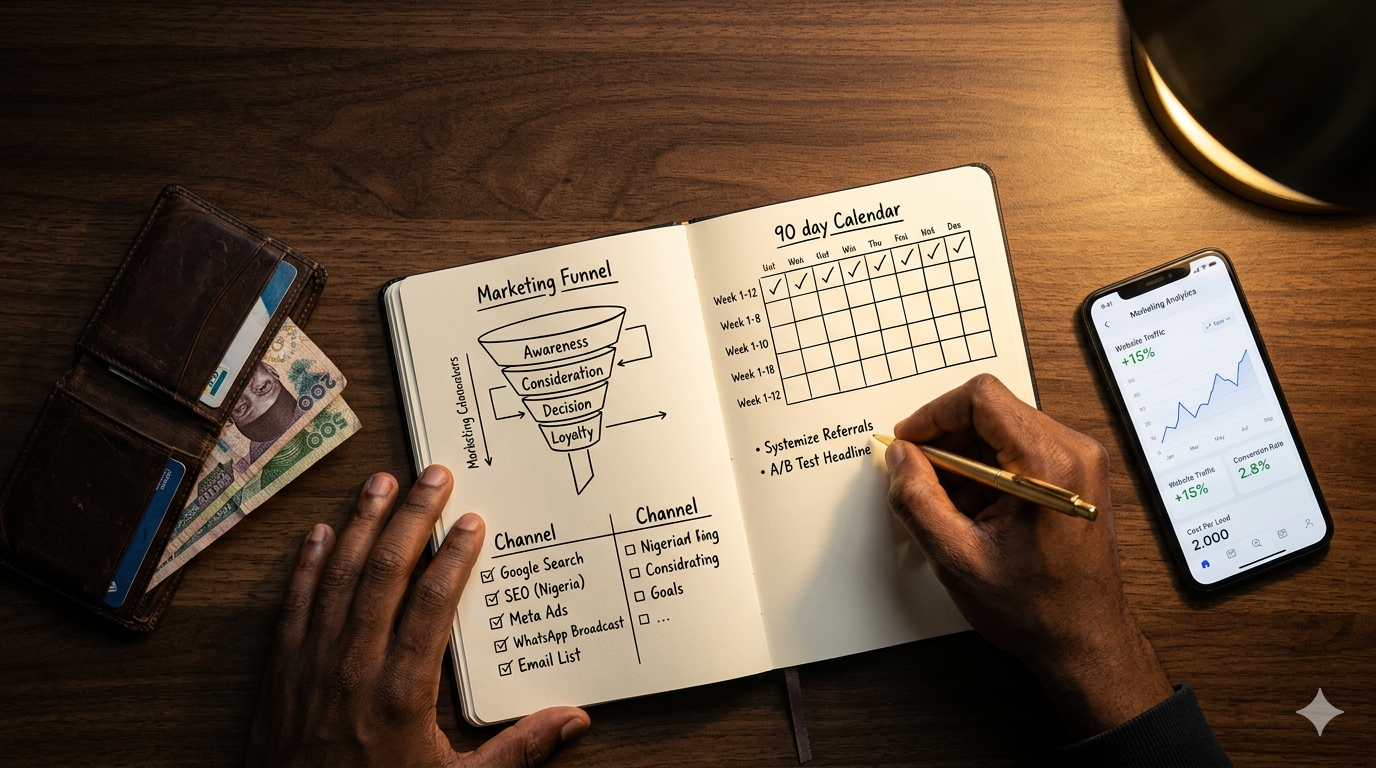
    Pick one primary goal for the next 90 days. Make it specific and measurable. Not ‘grow our online presence’ but ‘generate 150 qualified leads per month from digital channels by the end of Q3.’ Everything in your strategy serves this one goal.

     ★  Goal FrameworkGood goal: Generate 80 qualified leads per month from our website and email campaigns by October 2025.Bad goal: Increase our social media presence and grow brand awareness.

    Step 2 — Define Your Ideal Customer With Precision

    You cannot build a strategy for ‘everyone’. The more precisely you define who you are talking to, the more powerfully your message will land — and the less you will spend reaching the wrong people.

    Define your Ideal Customer Profile (ICP) across three dimensions: demographics (age, location, business stage, revenue range), psychographics (what keeps them up at night, what success looks like, what they value), and search behaviour (what do they type into Google when looking for what you sell?).

    → Related: Brand Development for Startups — how to define your ICP and build your positioning (tombridigital.com/blog/brand-development-for-startups-nigeria)

    Step 3 — Choose 2–3 Channels (Not Six)

    Every channel takes time to master. Spreading your effort across six platforms means being mediocre everywhere. Pick two channels where your ICP is most active and where you can compete, and go deep.

    Business TypeBest Primary ChannelsWhy
    B2C Product/E-commerceMeta Ads + EmailWidest reach in Nigeria, retargeting capability, proven purchase-intent flow
    B2B Services/SaaSLinkedIn + Google SearchHigh-value buyer intent, decision-maker targeting, long-form content authority
    Local Service BusinessGoogle My Business + WhatsAppHigh local intent, direct communication, zero-cost relationship building
    Education/CoachingInstagram/YouTube + EmailContent authority building, visual demonstration, high-nurture buyer journey
    Fintech/FinanceGoogle Search + Content SEOHigh-intent searches, trust-building content, compliance-safe approach

    Step 4 — Map Your Message to the Buyer Journey

    Different messages work at different stages. A person who has never heard of you needs a different message than someone comparing your offer to a competitor. Match your content to where your audience is in the decision process.

    • Awareness stage: educate, entertain, or solve a problem. Do not sell. Goal: earn their attention and trust.
    • Consideration stage: differentiate your approach. Case studies, comparison content, detailed guides. Goal: become the obvious choice.
    • Decision stage: make the offer clear, reduce the risk, and give them a reason to act now. Guarantees, testimonials, limited offers.

    Step 5 — Define Your KPIs Before You Start

    KPIs (Key Performance Indicators) are the numbers that tell you whether your strategy is working. Set them before you launch. Review them every Monday morning. When a number is consistently below target, that is your signal to investigate and adjust.

    • Website traffic (target: 10% month-on-month growth)
    • Lead opt-in rate (target: 25%+ on landing pages)
    • Email open rate (target: 28–40%)
    • Cost per lead from paid channels (target: under 20% of customer LTV)
    • Conversion rate from lead to customer (target: 15–30% after nurture)

    Conclusion

    A digital marketing strategy does not need to be complicated or expensive. It needs to be clear. One goal. One ICP. Two or three channels. One message per funnel stage. Five numbers to watch every week.

    The founders who build this clarity into their marketing spend less, convert more, and grow consistently — while their competitors are still trying to figure out which platform to post on next.

  • Lead Generation Strategies That Actually Work for Nigerian Startups

    Lead Generation Strategies That Actually Work for Nigerian Startups

    Introduction

    If your business’s pipeline depends on referrals and hoping someone finds you, you do not have a lead generation strategy. You have a wish.

    Consistent lead generation — a predictable, repeatable system that fills your pipeline with qualified prospects every single month — is what separates the startups that scale from the ones that stall. It is not about spending more money. It is about building the right system.

    This article covers seven lead generation strategies that work specifically in the Nigerian market in 2025, with practical steps for each one.

    Why Most Nigerian Startups Struggle to Generate Leads

    After working with 200+ businesses across Nigeria and Africa, the pattern is always the same. Startups struggle with lead generation for one of four reasons:

    • They have no lead magnet — no reason for a visitor to give their email address
    • They are targeting the wrong audience — speaking to everyone and converting no one
    • They have no follow-up system — capturing a lead but then going silent
    • They are on the wrong channels — where they assume their audience is, not where they actually are

    The strategies below address all four simultaneously.

    7 Lead Generation Strategies That Work for Nigerian Startups

    1. Create a High-Value Lead Magnet

    Your lead magnet is the foundation of your entire lead generation system. It is the thing you offer a potential customer in exchange for their email address — and it must be so genuinely useful that they would almost pay for it.

    The best-performing lead magnets in Nigeria right now: industry-specific checklists, ROI calculators, comparison guides (e.g. ‘Best 5 payroll tools for Nigerian SMEs’), and short how-to templates. The more specific to your ideal customer’s exact situation, the higher your opt-in rate.

    2. Optimise Your Landing Page for Conversion

    A landing page that converts at 30–40% is the single most powerful thing you can do for your cost per lead. The same ad budget generates twice the leads when your landing page converts at 30% versus 15%.

    The formula: one headline that names the specific outcome, three benefit bullets that answer ‘what will I be able to DO?’, a form with first name and email only, a CTA button that describes what they get (not what they do), and one trust signal near the form.

    → Related: How to Build a Sales Funnel That Converts — includes full landing page breakdown

    3. Run Highly Targeted Meta Ads

    For B2C and product-based businesses targeting Nigerian consumers, Meta Ads (Facebook and Instagram) remains the most cost-effective paid lead generation channel in 2025. The key is targeting depth — not just age and location, but interests, behaviours, and custom audiences built from your existing customer data.

    Start with a retargeting campaign aimed at website visitors who did not convert. These are your warmest leads and cost the least to convert. Then build lookalike audiences from your best existing customers.

    4. Invest in SEO and Long-Form Content

    Organic search traffic is the most valuable traffic you can generate because it is free, compounding, and high-intent. Someone who finds your website through a Google search for ‘best payroll software Nigeria’ is already in buying mode.

    The strategy: build a pillar-cluster content architecture. One comprehensive pillar article (3,000–5,000 words) on your core topic, supported by 8–12 cluster articles each targeting a specific long-tail keyword. Google rewards topical expertise with higher rankings across all related queries.

    It takes 3–6 months to see results, but the leads it generates cost nothing and compound indefinitely.

    5. Build and Leverage a WhatsApp Broadcast List

    This is the most underutilised lead generation asset among Nigerian startups. WhatsApp has a 98% open rate in Nigeria — compared to 25–35% for email. Build a segmented broadcast list, provide genuine weekly value, and include a soft CTA in each message. The leads generated through WhatsApp tend to be highly qualified because joining your list requires an intentional opt-in.

    6. Use LinkedIn for B2B Lead Generation

    For startups selling to other businesses — HR software, financial services, B2B SaaS, consultancy — LinkedIn is the single highest-quality lead source available in Nigeria. The strategy: optimise your profile and company page for your target role (e.g. ‘HR Director Lagos’), publish weekly insights, engage with prospects’ content before sending a connection request, and use Sales Navigator for targeted outreach.

    Average B2B deal sizes from LinkedIn leads are 2–3 times higher than leads from other channels.

    7. Systemise Your Referral Engine

    Word-of-mouth generates the highest-converting leads of any channel — because a recommendation from a trusted source removes every objection instantly. Most startups rely on organic referrals. The ones scaling fast have systematised it.

    The system: identify your top 20% of clients, send a personalised referral request 21 days after delivering results, offer a referral incentive, and make it easy with a simple referral link. A systematic referral programme can generate 20–40% of new revenue at zero acquisition cost.

    → Related: Marketing Automation for Small Businesses — how to automate your referral request

    Conclusion

    Consistent lead generation in Nigeria does not require a massive ad budget or a large marketing team. It requires a clear ICP, a compelling lead magnet, a converting landing page, and a follow-up system that works automatically.Start with one strategy. Build it properly. Measure the result. Add the next one. Within six months, you will have a pipeline that no longer depends on luck.

  • How to Build a Sales Funnel That Converts: A Step-by-Step Guide for Startups

    How to Build a Sales Funnel That Converts: A Step-by-Step Guide for Startups

    Introduction

    97% of the people who visit your website today will not buy. Not because your product is bad. Not because your price is wrong. Because there is no path.

    A sales funnel is that path. It is the deliberate sequence of steps that moves a complete stranger from ‘I’ve never heard of this’ to ‘I’m a loyal customer who tells everyone about you.’ Every business that grows predictably has one. Most startups that plateau do not.

    This guide walks you through how to build a sales funnel for your startup from scratch — with the exact stages, tools, and conversion benchmarks you need to make it work.

    What Is a Sales Funnel and Why Does Your Startup Need One?

    A sales funnel is a marketing model that maps the journey a customer takes from first awareness of your business to final purchase and beyond. The name comes from the shape: wide at the top (many people enter) and narrow at the bottom (fewer people buy — but they are the right ones).

    Without a funnel, you are relying on the rare person who visits your website at exactly the right moment, with exactly the right intent, and somehow finds the confidence to buy from a brand they have never heard of before. That person exists. But they are 3% of your traffic.

    A funnel captures the other 97% and keeps them warm until they are ready.

    The 5 Stages of a High-Converting Sales Funnel

    AWARENESS

    They discover you exist  “Is this for me? Does this look credible?”

    A potential customer encounters your brand for the first time — through a Google search, a social media ad, a referral, or a piece of content you published. Your only job at this stage: make a great first impression and give them a reason to take the next step.

    INTEREST

    They want to know more  “Can they actually help me? What do they offer?”

    They clicked. They landed on your website or a specific page. They are evaluating whether you are worth their attention. This is where your lead magnet lives — your best opportunity to capture their contact details before they disappear.

    CONSIDERATION

    They are comparing you to alternatives  “Why you and not someone else? Why now?”

    They have opted in. They know who you are. Now they are deciding whether to buy from you, a competitor, or nobody at all. This is the most neglected stage in most startup funnels — and the most valuable. Your email nurture sequence lives here.

    DECISION

    They are ready — they just need a push  “Is this the right deal? What happens if it doesn’t work?”

    They have decided they want what you are selling. The question is whether they will buy from you today or get distracted and delay. Friction, doubt, and unclear next steps all kill conversions at this stage.

    LOYALTY

    They bought. Now keep them.  “Was this worth it? Would I recommend it?”

    The sale is not the end of the funnel — it is the start of its most profitable section. A customer who had a great experience will buy again, spend more, and refer others. Your post-purchase onboarding sequence creates this.

    The 4 Core Components You Need to Build Your Funnel

    1. Your Lead Magnet

    A lead magnet is the valuable free resource you offer in exchange for an email address. It must solve a specific, urgent problem for your ideal customer — not a vague collection of tips they could Google. Checklists, templates, mini-guides, calculators, and swipe files convert best.

    The single biggest lead magnet mistake: making it about what you want to teach instead of what your audience desperately wants to know right now.

    2. Your Landing Page

    One page. One goal. No navigation menu, no links out, no distractions. Your landing page has a single job: convert a visitor into a lead by getting them to submit their name and email in exchange for your lead magnet. Conversion rate benchmark: 25–45% for targeted traffic.

    • Headline: states the outcome, not the format (not ‘Download our free guide’ — instead: ‘Get the 10-Point Checklist That Generated 400 Startup’s First 1,000 Leads’)
    • 3–5 benefit bullets: each one answers ‘what will I be able to DO after this?’
    • Form: first name + email only. Every extra field drops conversion by 25%
    • CTA button: ‘Send Me the Checklist’ beats ‘Submit’ every time
    • Social proof: a testimonial or download count near the form

    3. Your Email Nurture Sequence

    Most of your leads are not ready to buy when they opt in. They need to be nurtured — educated, built into trust, and caught at the moment they are ready. A 7-email welcome sequence over 14 days is the minimum. Each email has one job: move the reader one step closer to trusting you enough to buy.

    → Related: Marketing Automation for Small Businesses — how to set this up automatically (tombridigital.com/blog/marketing-automation-small-business-nigeria)

    4. Your Conversion Mechanism

    The final step where the lead becomes a customer. This is usually a sales page, a booking page for a discovery call, or a checkout page. The same rules apply as your landing page: one goal, clear offer, strong social proof, and a risk reversal (guarantee, free trial, or no-commitment option).

    Conclusion

    Building a sales funnel is not complicated. It is four components — a lead magnet, a landing page, an email sequence, and a conversion mechanism — connected in the right order and pointed at the right people.

    The founder who builds this properly in the next 30 days will spend the rest of the year watching leads convert on autopilot while their competitors are still posting manually and wondering why growth is slow.

  • Marketing Automation for Small Businesses: How to Grow Without a Big Team

    Marketing Automation for Small Businesses: How to Grow Without a Big Team

    Introduction

    The most expensive thing in your business is not your team, your ad budget, or your office. It is the leads you are losing because no one followed up in time.

    Research consistently shows that 80% of sales require at least five follow-ups. The average business follows up once — if at all. Marketing automation is the system that closes this gap. It follows up for you, nurtures your leads for you, and catches your hottest prospects at the exact moment they are ready to buy — without you lifting a finger.

    This guide explains what marketing automation is, why Nigerian small businesses cannot afford to ignore it, and how to set up the seven automations that will immediately change how your business grows.

    What is Marketing Automation (And What It Is Not)

    Marketing automation is the use of software to send the right message to the right person at the right time — triggered by a specific action they take, not by you manually pressing send.

    When someone downloads your lead magnet: automation. When someone visits your pricing page three times without buying: automation. When a customer completes a purchase: automation. When someone has not opened your emails in 60 days: automation.

    What marketing automation is not: spammy bulk emails, cold outreach to purchased lists, or a replacement for genuine human connection. Done right, automated emails feel more personal than manual ones — because they arrive at exactly the right moment.

    The 7 Automations Every Small Business Needs

    01  Welcome Sequence

    Trigger: Trigger: New email subscriber or lead magnet download

    7 emails over 14 days. This is your most important automation. Leads are warmest in the first 24–48 hours. Your welcome sequence must deliver value immediately, introduce your brand’s personality, and move subscribers toward a first purchase or conversation. Do not skip this. Do not rush it.

    02  Lead Nurture Drip

    Trigger: Trigger: Subscriber completed welcome sequence without purchasing

    Weekly or bi-weekly emails indefinitely. The buyers who are not ready today will be ready in 30, 60, or 90 days. Your nurture drip keeps you top-of-mind. Each email: one insight, one story, or one practical tip. No hard sell.

    03  Abandoned Enquiry Follow-Up

    Trigger: Trigger: Visited pricing page 2+ times or started a form without completing

    3 emails over 5 days. Someone who visits your pricing page three times is not browsing — they are deciding. One timely, empathetic follow-up email often converts this person. This single automation consistently delivers the highest ROI of anything you can set up.

    04  Purchase Confirmation and Onboarding

    Trigger: Trigger: Customer makes a purchase

    5 emails over 14 days. The moment after purchase is when buyers are most vulnerable to doubt. A brilliant onboarding sequence eliminates that doubt, confirms they made the right choice, gets them to their first win quickly, and requests a review at exactly the right moment.

    05  Upsell Sequence

    Trigger: Trigger: 7–14 days after first purchase, for customers showing positive engagement

    2–3 emails. Your existing customers are your best sales opportunity. They have already trusted you once. An upsell offer that feels like a natural next step converts at 20–30% among satisfied customers — with zero additional acquisition cost.

    06  Re-engagement Campaign

    Trigger: Trigger: No email opens in 60 days or no purchase in 90 days

    3 emails over 7 days. Every list has a dormant segment. A well-timed re-engagement campaign wakes up 5–20% of cold leads. Remove anyone who does not re-engage — a clean, active list dramatically outperforms a large, unresponsive one.

    07  Referral and Review Request

    Trigger: Trigger: 21–30 days after successful purchase

    2 emails. Word of mouth is still the highest-converting lead source for most Nigerian businesses. But most founders never ask for it systematically. An automated referral request sent at the right time generates 10–30% of new customers at zero acquisition cost.

    Best Marketing Automation Tools for Nigerian Small Businesses

    Mailchimp: Free up to 500  Beginners — simplest setup, good for basic sequences

    ConvertKit: Free up to 1,000  Creators and service businesses — clean, excellent deliverability

    MailerLite: Free up to 1,000  Budget-conscious founders — simple but capable, landing pages included

    ActiveCampaign: From $15/month  Growing businesses — powerful automation builder, built-in CRM, lead scoring

    HubSpot: Free CRM, paid add-ons  B2B with a sales team — full marketing + sales + service stack

    Conclusion

    Marketing automation is not a luxury for Nigerian small businesses — it is a survival tool. The businesses growing consistently are not bigger or better funded than yours. They have built a system that follows up automatically, nurtures without manual effort, and never lets a warm lead go cold.

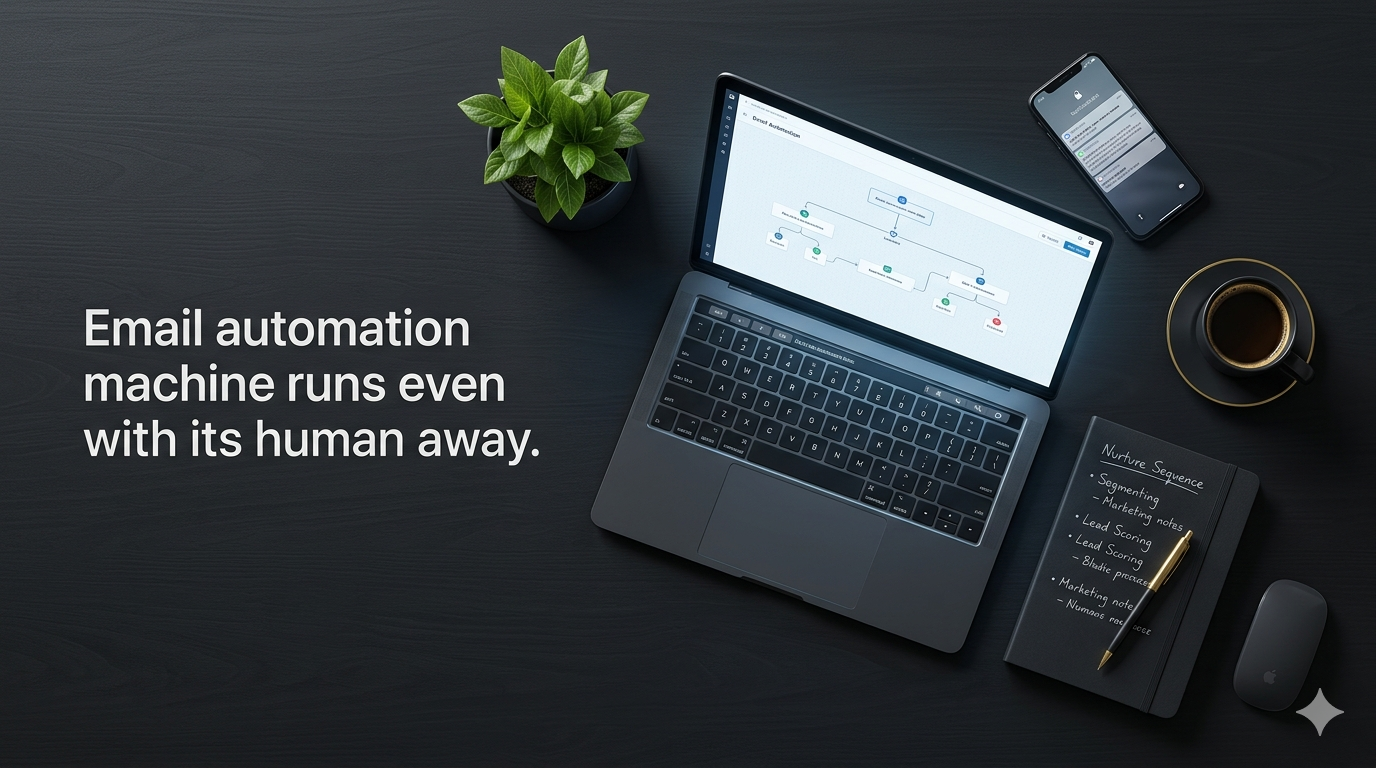
    Start with the welcome sequence. Build it this week. Add the abandoned enquiry follow-up. Then the onboarding sequence. By the end of the month, you will have an automated marketing engine that runs whether you are in a client meeting, asleep, or on leave.