Introduction
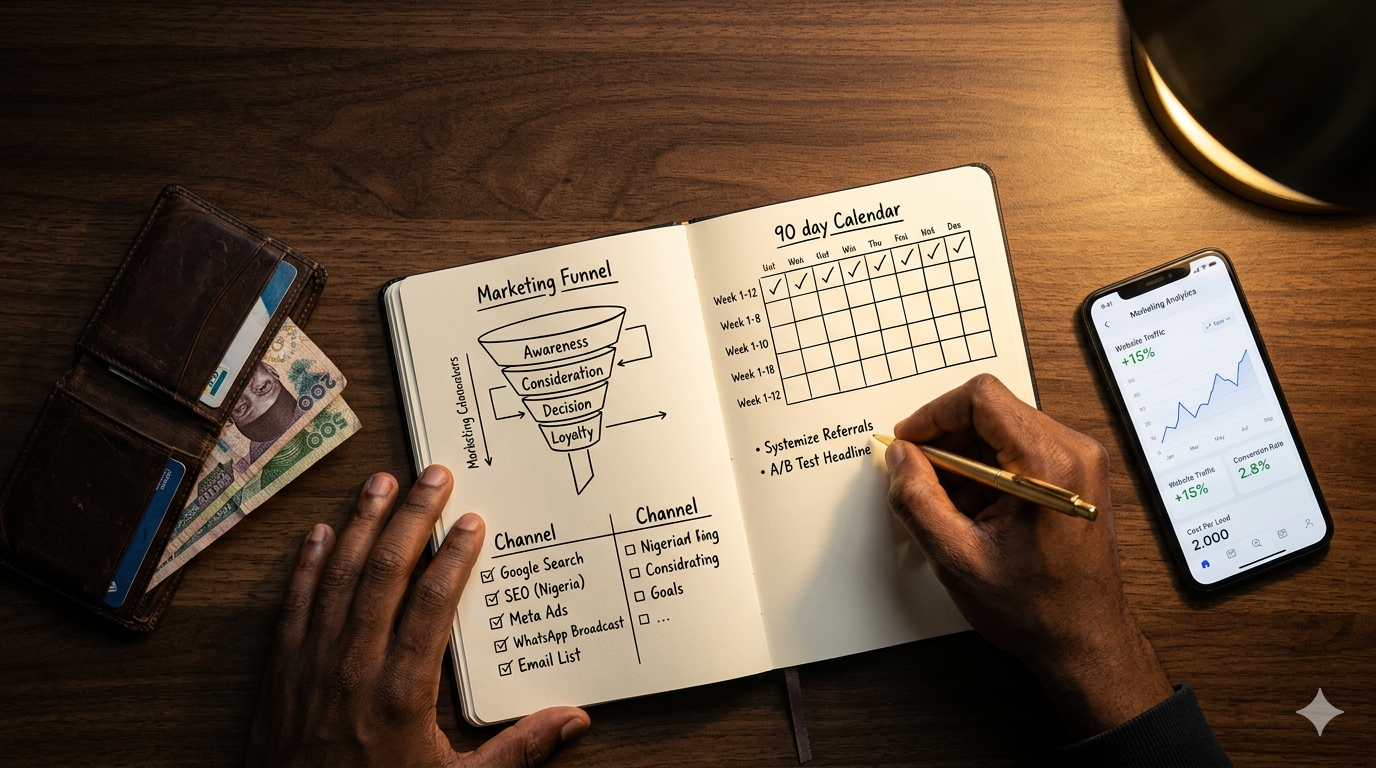
If your business’s pipeline depends on referrals and hoping someone finds you, you do not have a lead generation strategy. You have a wish.
Consistent lead generation — a predictable, repeatable system that fills your pipeline with qualified prospects every single month — is what separates the startups that scale from the ones that stall. It is not about spending more money. It is about building the right system.
This article covers seven lead generation strategies that work specifically in the Nigerian market in 2025, with practical steps for each one.
Why Most Nigerian Startups Struggle to Generate Leads
After working with 200+ businesses across Nigeria and Africa, the pattern is always the same. Startups struggle with lead generation for one of four reasons:
- They have no lead magnet — no reason for a visitor to give their email address
- They are targeting the wrong audience — speaking to everyone and converting no one
- They have no follow-up system — capturing a lead but then going silent
- They are on the wrong channels — where they assume their audience is, not where they actually are
The strategies below address all four simultaneously.
7 Lead Generation Strategies That Work for Nigerian Startups
1. Create a High-Value Lead Magnet
Your lead magnet is the foundation of your entire lead generation system. It is the thing you offer a potential customer in exchange for their email address — and it must be so genuinely useful that they would almost pay for it.
The best-performing lead magnets in Nigeria right now: industry-specific checklists, ROI calculators, comparison guides (e.g. ‘Best 5 payroll tools for Nigerian SMEs’), and short how-to templates. The more specific to your ideal customer’s exact situation, the higher your opt-in rate.
2. Optimise Your Landing Page for Conversion
A landing page that converts at 30–40% is the single most powerful thing you can do for your cost per lead. The same ad budget generates twice the leads when your landing page converts at 30% versus 15%.
The formula: one headline that names the specific outcome, three benefit bullets that answer ‘what will I be able to DO?’, a form with first name and email only, a CTA button that describes what they get (not what they do), and one trust signal near the form.
→ Related: How to Build a Sales Funnel That Converts — includes full landing page breakdown
3. Run Highly Targeted Meta Ads
For B2C and product-based businesses targeting Nigerian consumers, Meta Ads (Facebook and Instagram) remains the most cost-effective paid lead generation channel in 2025. The key is targeting depth — not just age and location, but interests, behaviours, and custom audiences built from your existing customer data.
Start with a retargeting campaign aimed at website visitors who did not convert. These are your warmest leads and cost the least to convert. Then build lookalike audiences from your best existing customers.
4. Invest in SEO and Long-Form Content
Organic search traffic is the most valuable traffic you can generate because it is free, compounding, and high-intent. Someone who finds your website through a Google search for ‘best payroll software Nigeria’ is already in buying mode.
The strategy: build a pillar-cluster content architecture. One comprehensive pillar article (3,000–5,000 words) on your core topic, supported by 8–12 cluster articles each targeting a specific long-tail keyword. Google rewards topical expertise with higher rankings across all related queries.
It takes 3–6 months to see results, but the leads it generates cost nothing and compound indefinitely.
5. Build and Leverage a WhatsApp Broadcast List
This is the most underutilised lead generation asset among Nigerian startups. WhatsApp has a 98% open rate in Nigeria — compared to 25–35% for email. Build a segmented broadcast list, provide genuine weekly value, and include a soft CTA in each message. The leads generated through WhatsApp tend to be highly qualified because joining your list requires an intentional opt-in.
6. Use LinkedIn for B2B Lead Generation
For startups selling to other businesses — HR software, financial services, B2B SaaS, consultancy — LinkedIn is the single highest-quality lead source available in Nigeria. The strategy: optimise your profile and company page for your target role (e.g. ‘HR Director Lagos’), publish weekly insights, engage with prospects’ content before sending a connection request, and use Sales Navigator for targeted outreach.
Average B2B deal sizes from LinkedIn leads are 2–3 times higher than leads from other channels.
7. Systemise Your Referral Engine
Word-of-mouth generates the highest-converting leads of any channel — because a recommendation from a trusted source removes every objection instantly. Most startups rely on organic referrals. The ones scaling fast have systematised it.
The system: identify your top 20% of clients, send a personalised referral request 21 days after delivering results, offer a referral incentive, and make it easy with a simple referral link. A systematic referral programme can generate 20–40% of new revenue at zero acquisition cost.
→ Related: Marketing Automation for Small Businesses — how to automate your referral request
Conclusion
Consistent lead generation in Nigeria does not require a massive ad budget or a large marketing team. It requires a clear ICP, a compelling lead magnet, a converting landing page, and a follow-up system that works automatically.Start with one strategy. Build it properly. Measure the result. Add the next one. Within six months, you will have a pipeline that no longer depends on luck.
Leave a Reply